
New Mexico: Close Encounters with Pistachios, Aliens, and Pond Ice
Postcards from the Land of Enchantment

January 25, 2025: We drove from Alamagordo to Roswell today, taking a route that, if laid over a map, would look like a snake writhing in pain. Left curve, right curve, left curve, right curve. The dinette table swung back and forth on its arm as the van took the bends in the road over the mountain pass. I went as slow as possible, but still the centrifugal force tossed the lighter contents from side to side.
The cats were included in that “lighter load.” Soon after we came down off the pass and were on smoother, straighter stretches of highway, Kindle emerged from his cubbyhole in the back garage, climbed over the garbage can, announced his displeasure to the room with a loud “mmmrrROW!” then stepped down and puked delicately on the floor. Without another word, he turned and slipped back into his cubbyhole hidden in the back of the van. “At least he came out and barfed on the floor and not any of the blankets,” Jean said as she patted the puke up with a paper towel.
January 27, 2025: Yesterday, we drove from Alamagordo to Fort Sumner—more than one hundred miles through land that had been pounded flat with a mallet, covered with a thin sandy soil and salted with a few seeds from the thirstiest, driest plants imaginable then turned loose on its own for three hundred years. This is Flat Country, not a ripple on the horizon. The highways are straight as rulers; not a building in sight for miles—just weak, poorly-maintained barbed-wire fences struggling to hold the tumbleweeds in place.
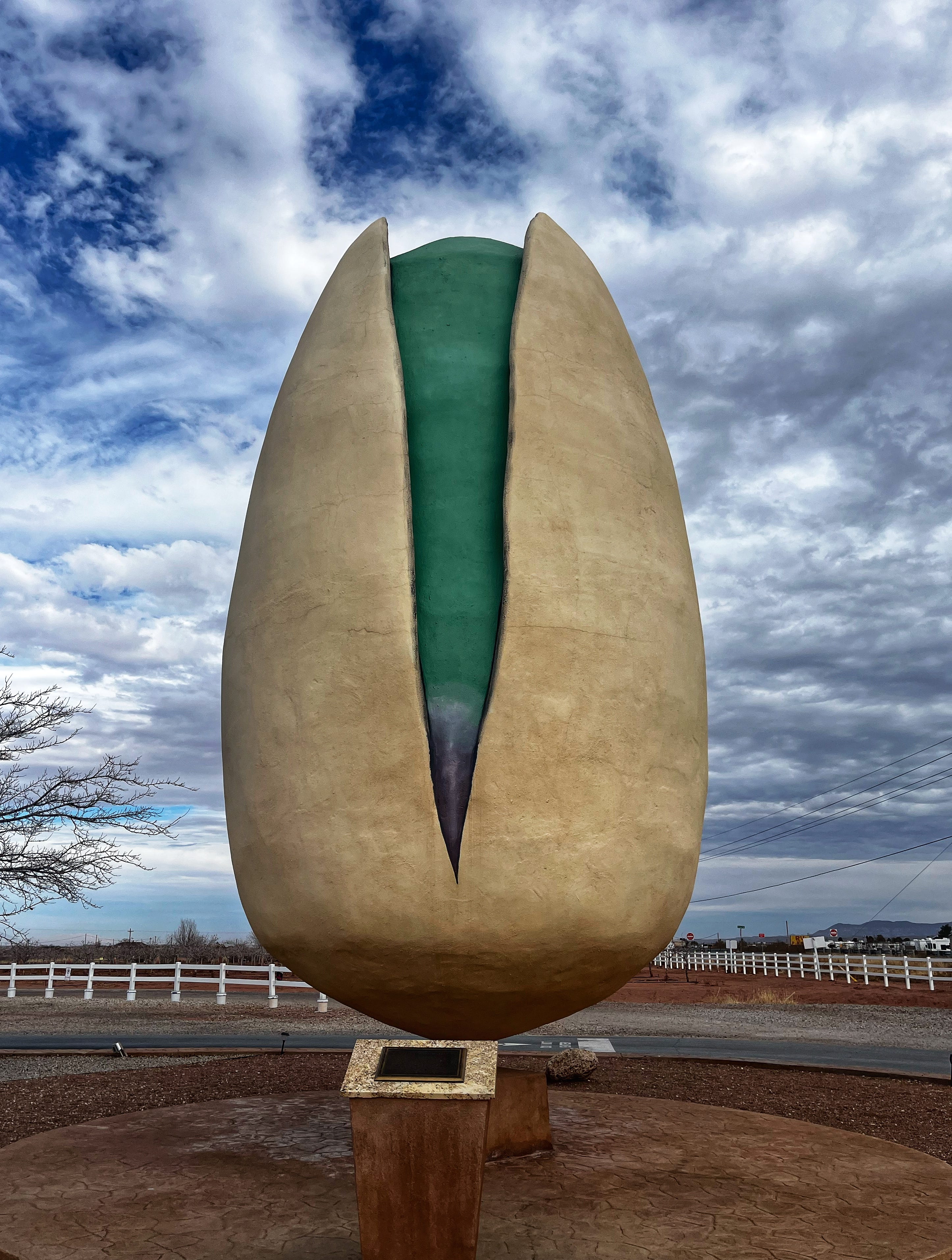
We began the day in Alamagordo at Pistachioland, “home of the world’s largest nut,” a thirty-foot tall sculpture of a split pistachio, the green meat poking out like an alien about to hatch from an egg.
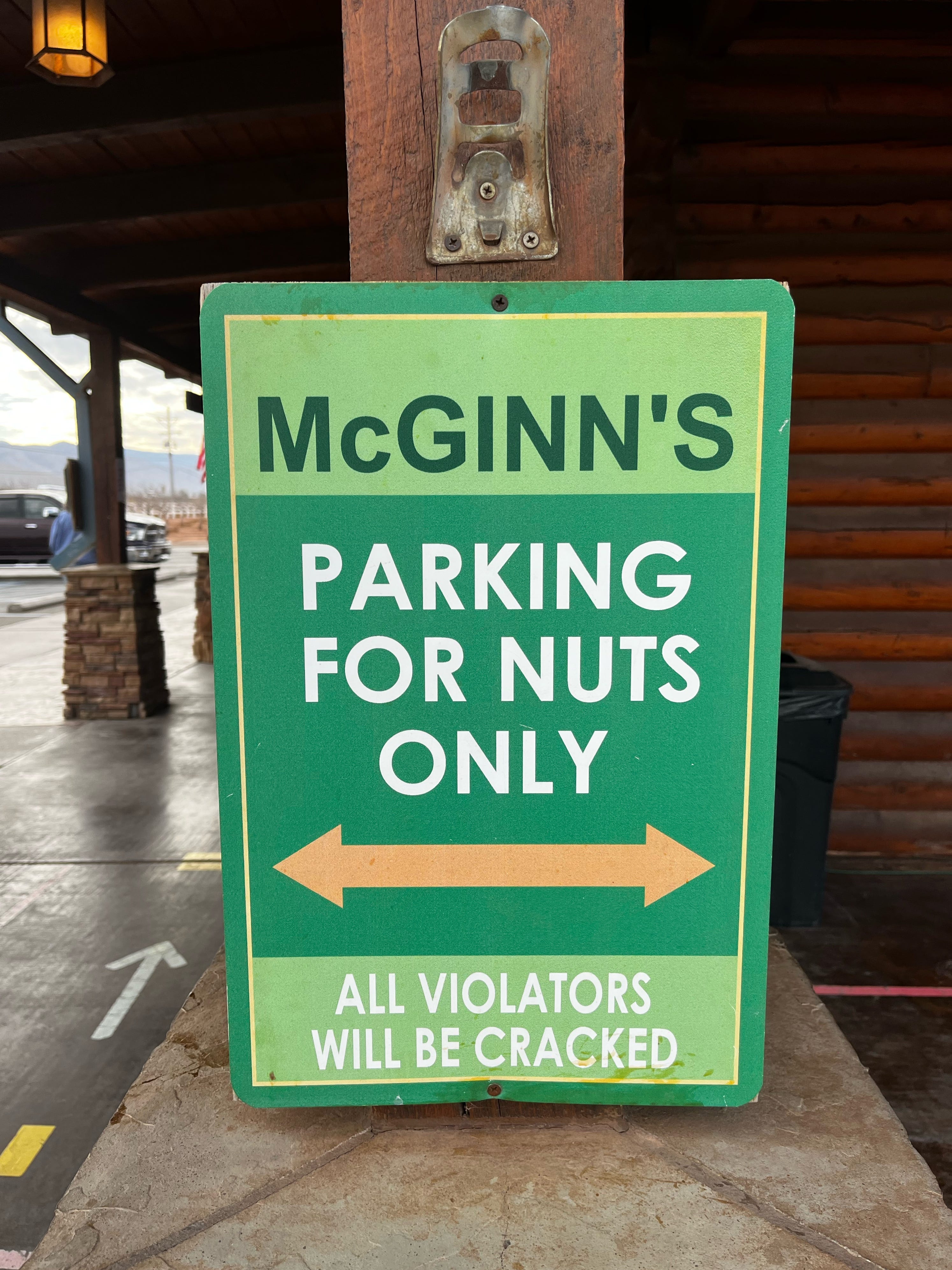
We bought a bag of nuts then moved up the road to the next over-hyped attraction in the desert.
Roswell, the famous UFO town, has seen better days. The downtown district is full of darkened storefronts and real estate signs. It’s almost as if half the residents had been abducted or something.
“Looks like Roswell hit its peak about five years ago,” I said. Has the UFO craze evaporated in America, or is it just a case of the word “alien” losing its appeal these days?
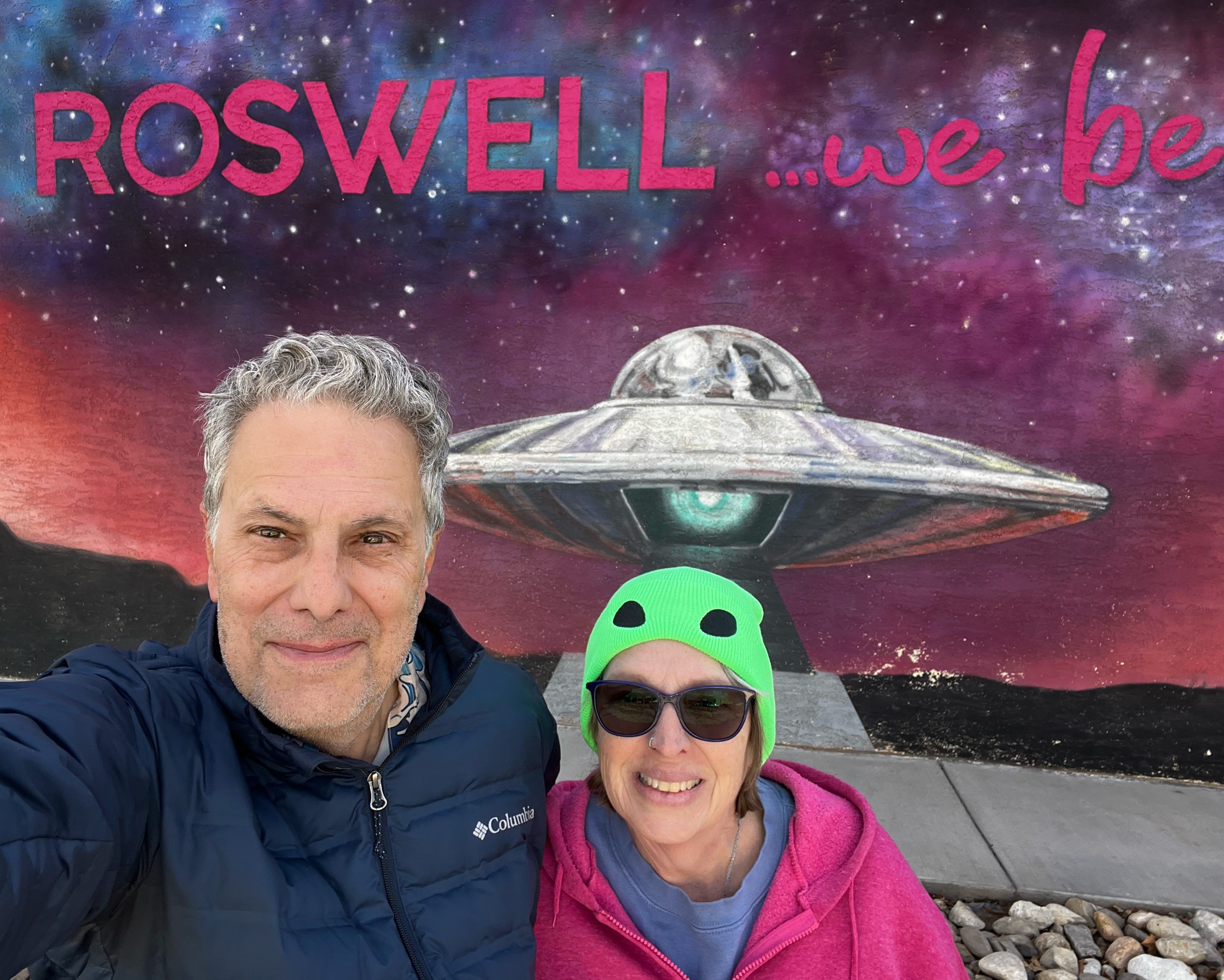
Outer space statues and images line the streets: lime-green bodies, face-consuming eyes, pinched mouths. The aliens are everywhere here; I’m not sure why the Department of Homeland Security is not more concerned about Roswell. The local paint store undoubtedly struggles to keep Spaceman Green #3 in stock. Outside Dunkin Donuts, a 10-foot tall alien with a buff Planet Fitness body holds up the store’s sign, his frown sternly encouraging us to come inside for a pumpkin-spice donut.
While the “Close Encounters” wave may have already peaked, there are still a few Things to Do in town—for instace, the International UFO Museum (why not “Intergalactic”?).
Jean and I paid our admission and stepped inside. Wow—talk about a museum with lots of promise but zero follow-through. While the UFO Museum had the best of intentions—telling us the story of the 1947 “Roswell Incident”—it was one of the most text-heavy museums I’ve ever walked through. Each section of the museum (housed in an old movie theater) was full of panels densely grey with text.
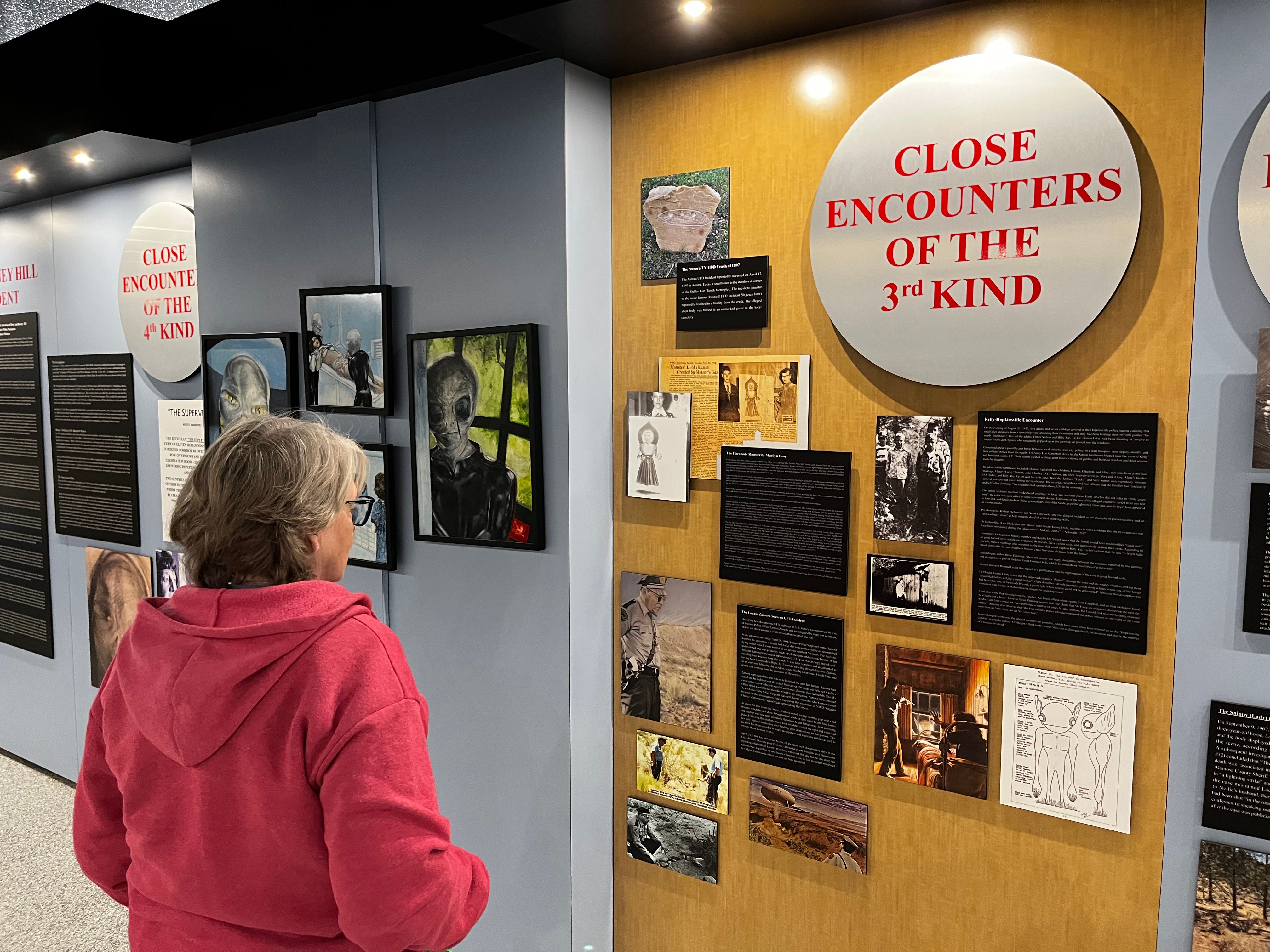
I started near the front entrance, trying to read the displays chronologically, following the story of the crash, but oof! even I got impatient faster than you could say “Steven Spielberg.” Jean of course was already lost and bored. There were some well-done dioramas and sculptures dotted throughout the wordy museum, but I think the whole production could have benefited from an editor with more red ink in the pen than green.
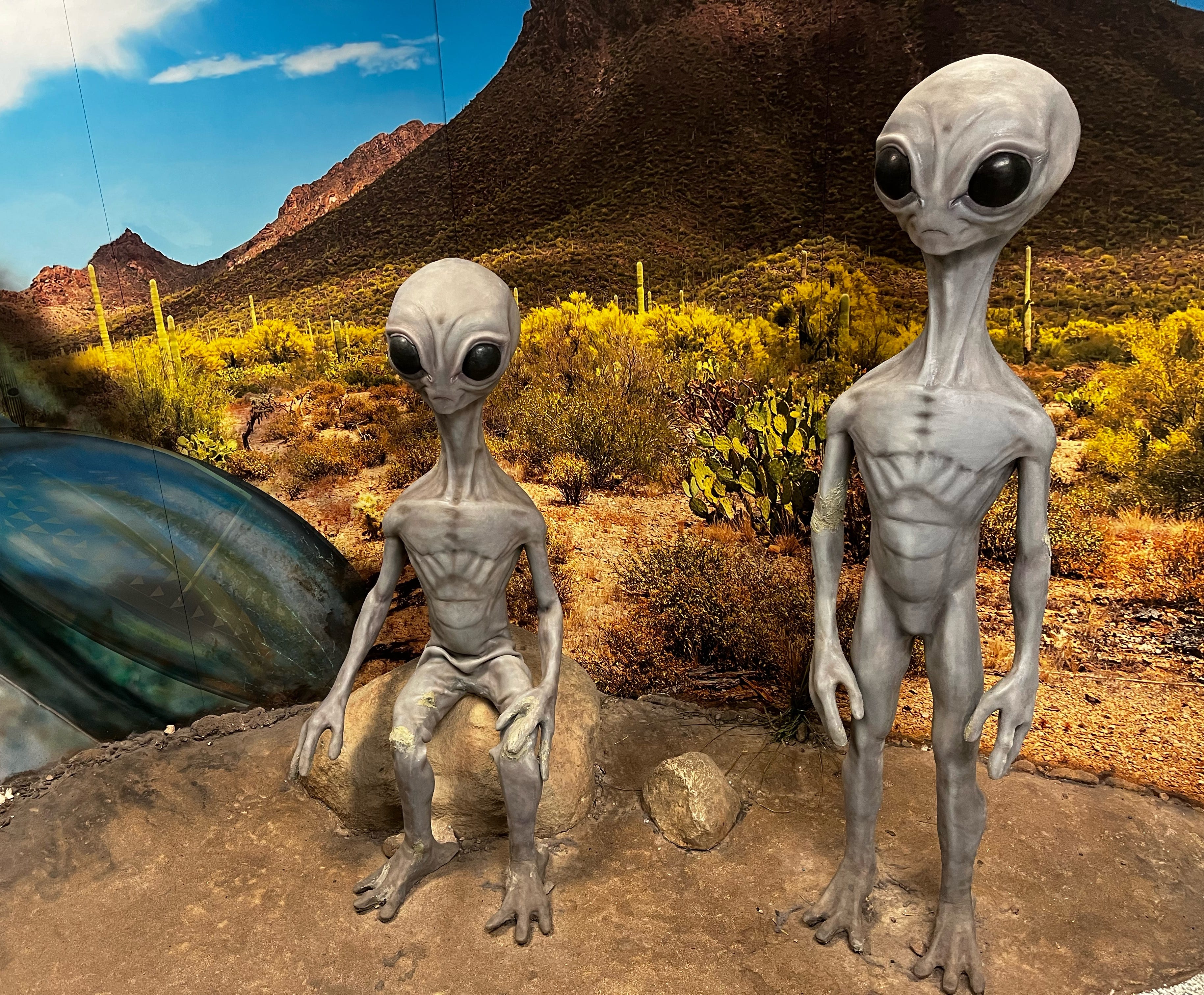
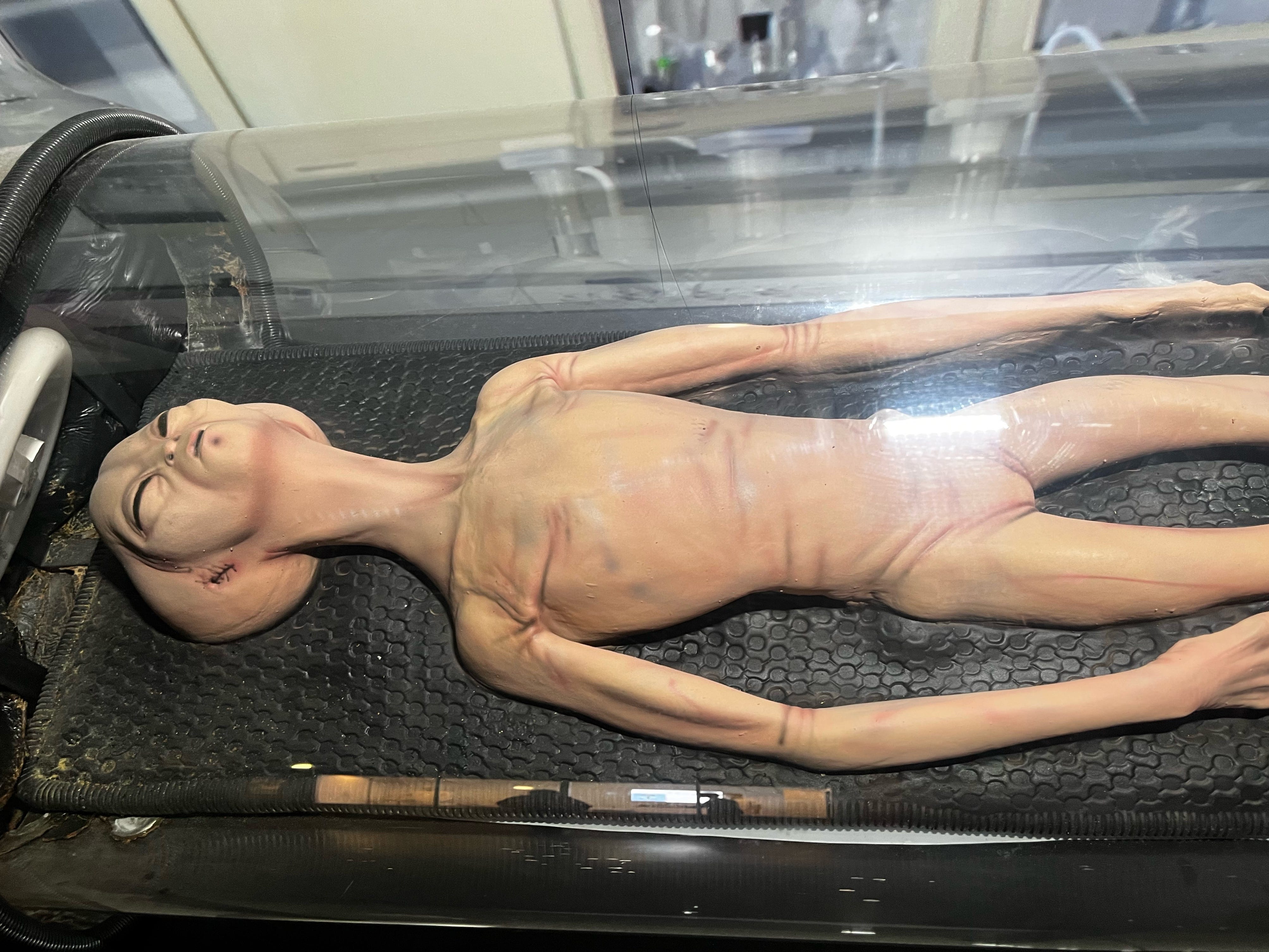
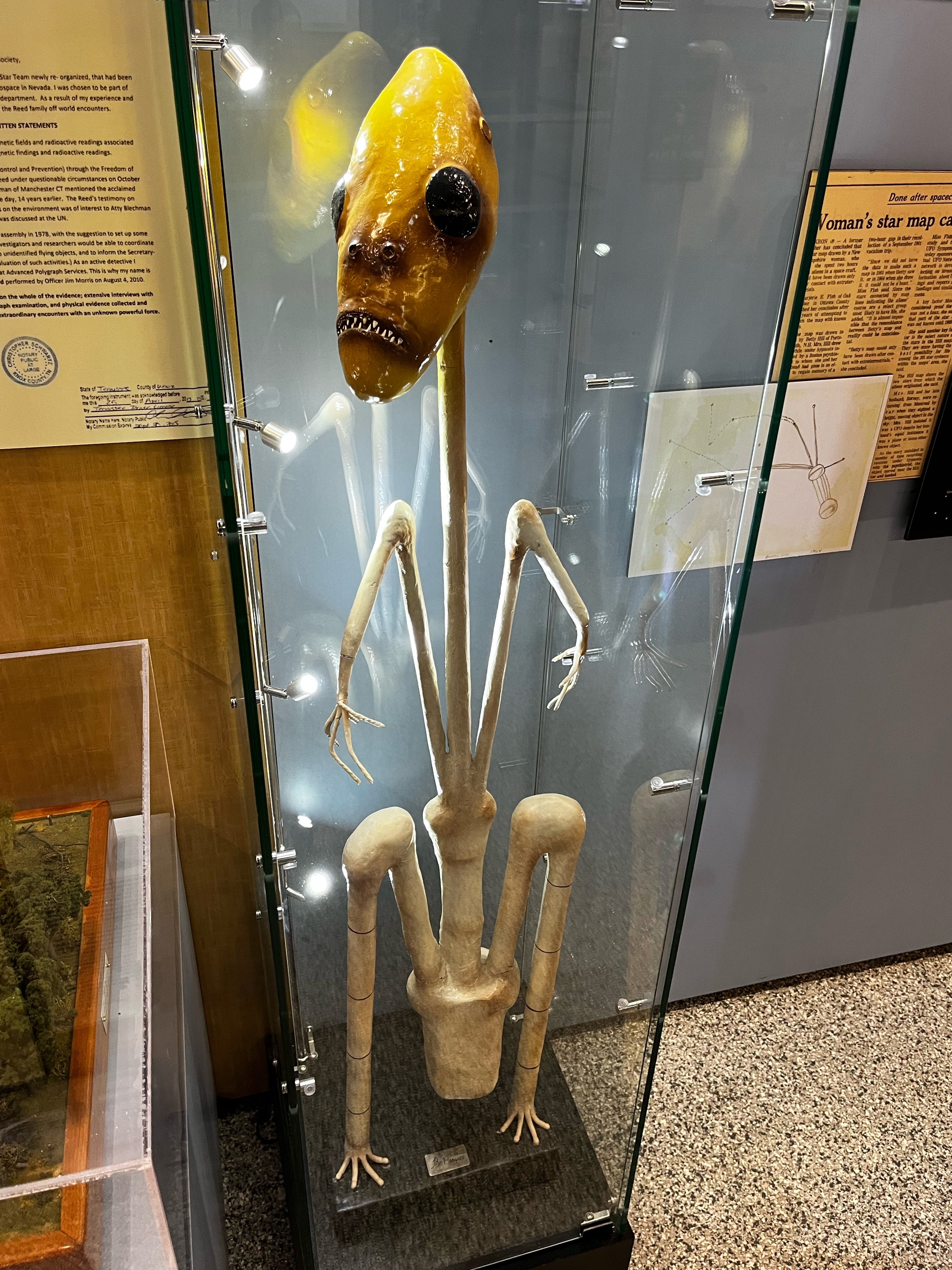
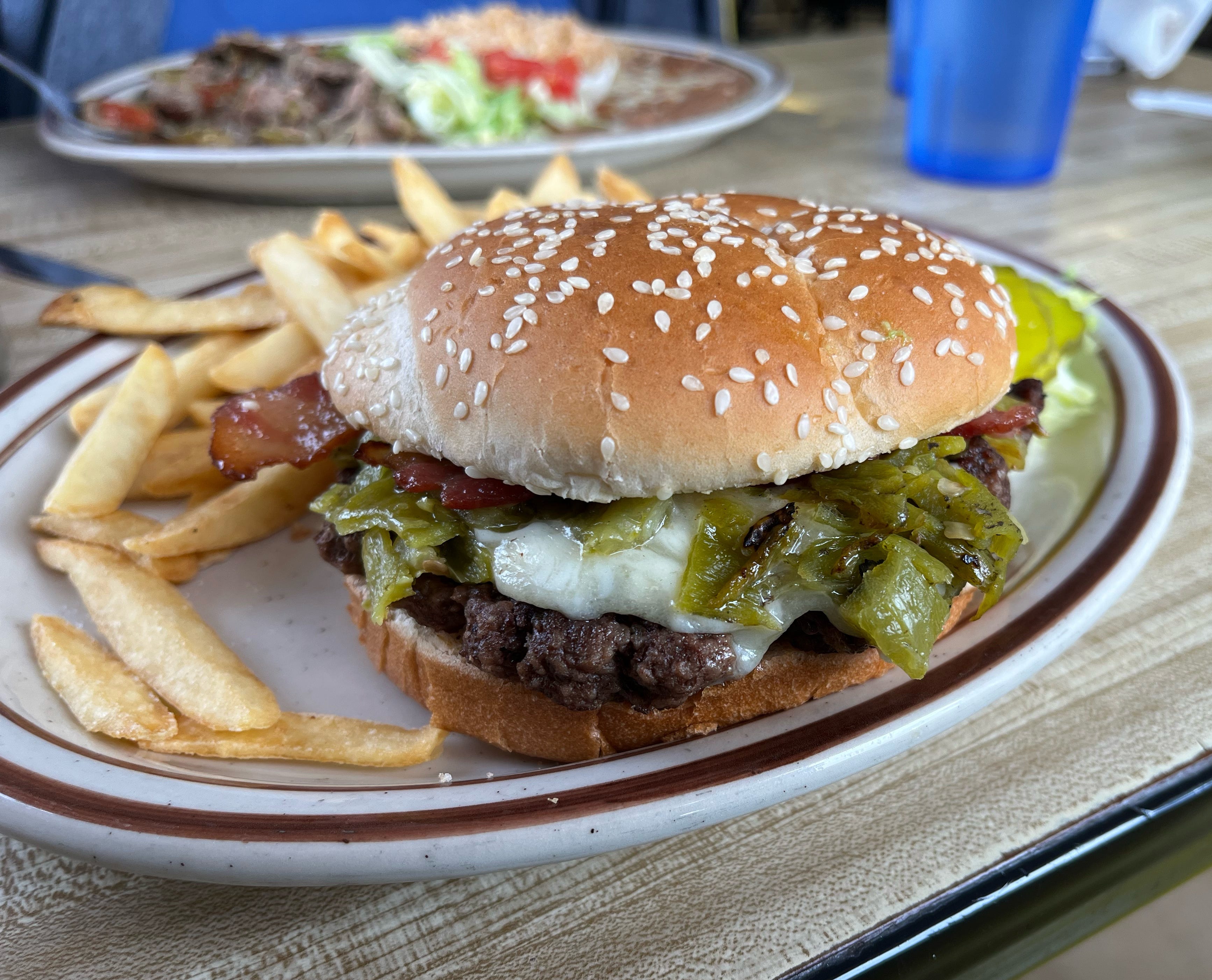
We left the aliens without regret and headed out for lunch. Oddly, I felt like having something green. So, I finally fulfilled my quest to have a Hatch Green Chile Burger. There may be better HGC burgers in New Mexico, but few will taste like old rubber green masks like the ones you’ll find in Roswell. Mine at [redacted] was hot and slippery and worthy of our family’s backhanded compliment: “It’ll make a turd.” Looks like my burger quest continues…
With a series of puttering burps, we left Roswell and continued north, stopping for the night outside of Fort Sumner at an old, deserted park (Bosque Redondo) with a thin, frozen lake. Save for one other camper in a tent on the opposite shore of the lake, we were the only ones here all night.
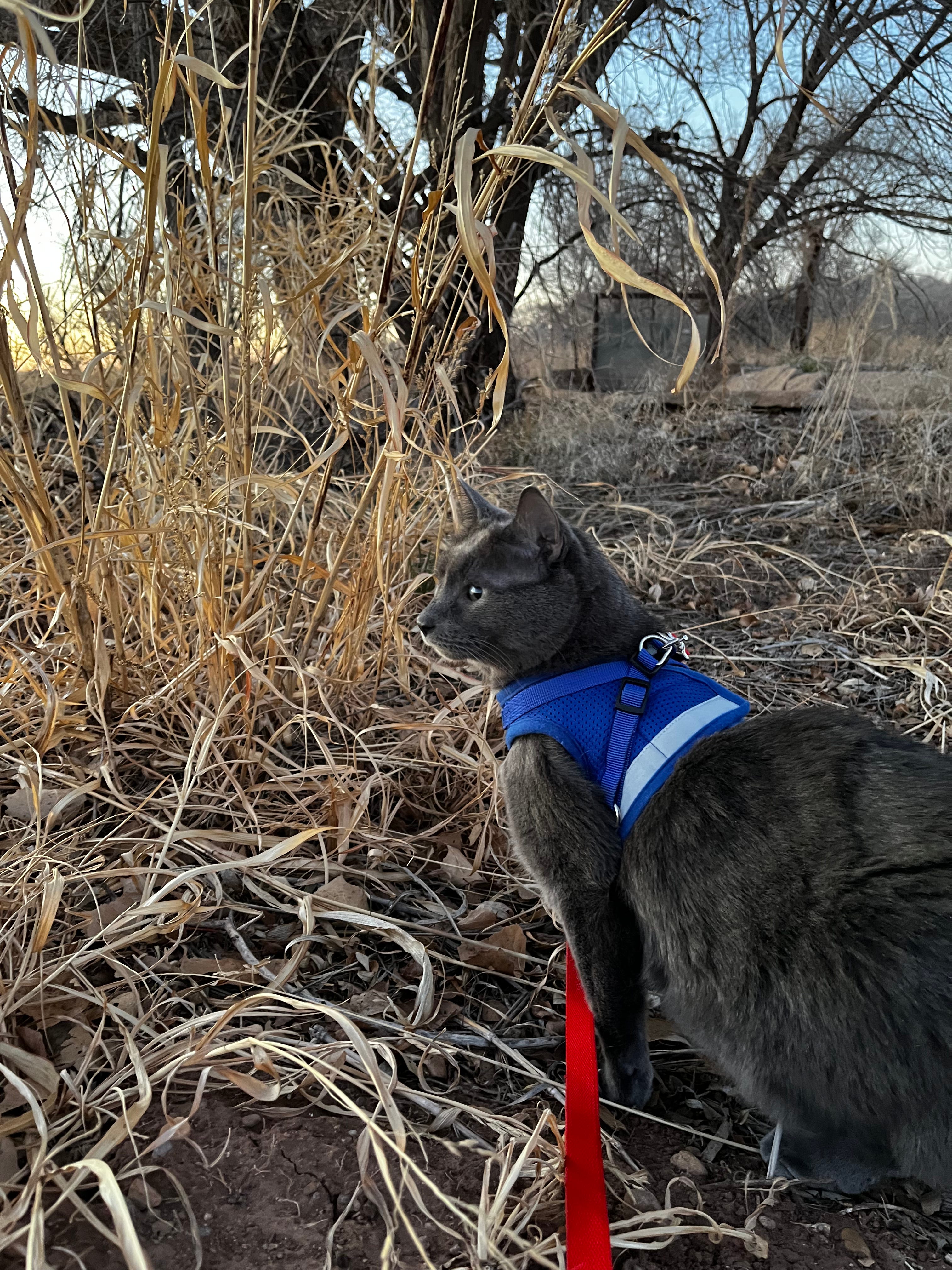
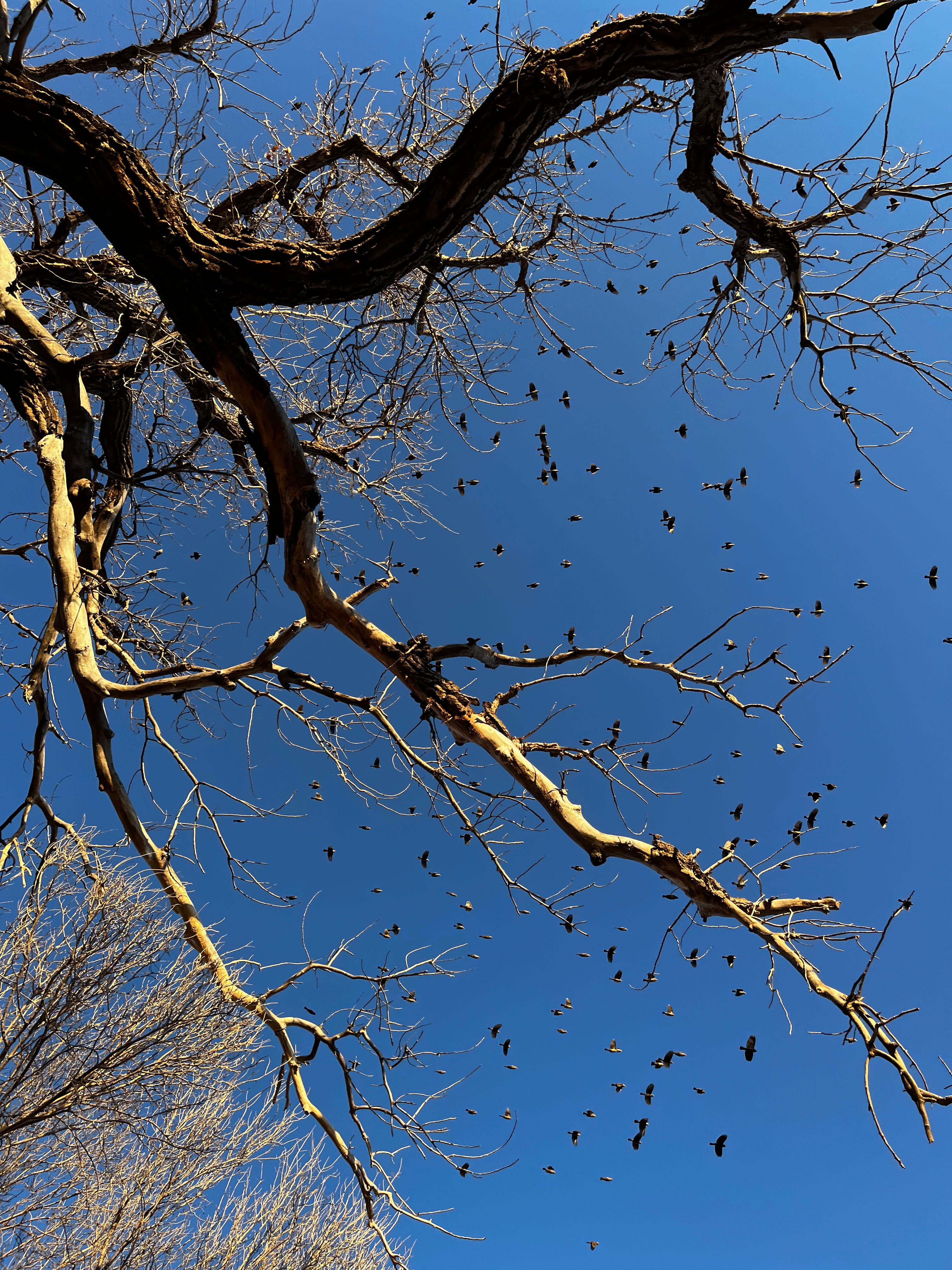
We set up camp and by 4:30 Jean and I were strolling around the lake. The temps were in the low 20s and we were bundled up tight. The frozen mud crunched beneath our boots. At our end of the lake, the water shallowed and turned marshy. Here were the forests of cattail stalks, shivering pale yellow in the golden light of evening. Here were the hundreds of red-winged blackbirds who made the marsh their home, here was outrageous music of the birds, each of them playing their own song full of whistles, clicks and flute trills. Here was the hard frozen ground suddenly imprinted with a map of hoofprints. Here was the herd of whitetails just ahead, running from us as if on pogo sticks, white flags waving in retreat. Here was the satisfaction of being in the world—raw, cold, beautiful—and not being in the stale bubble of our van.
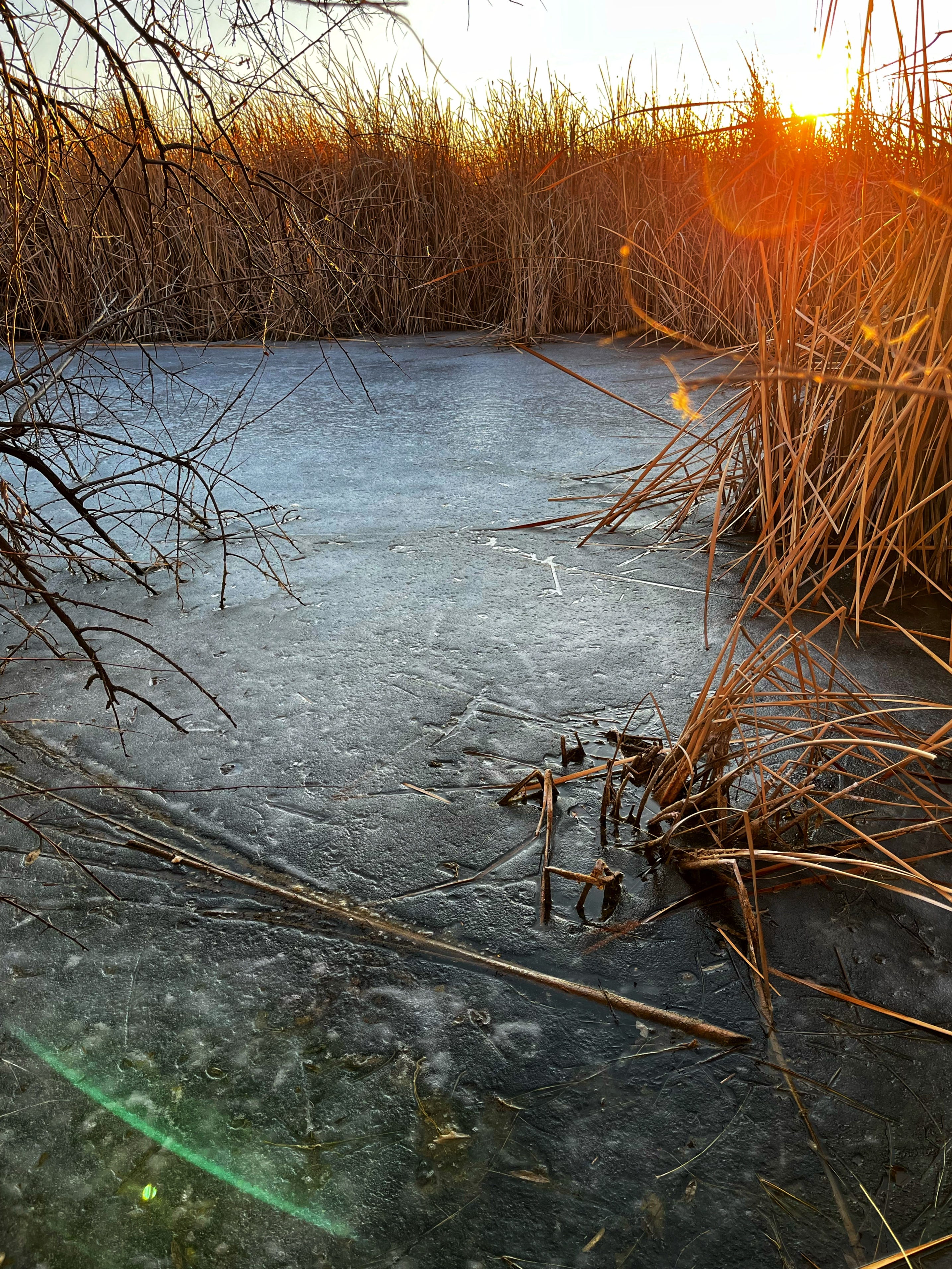
As we neared the end of our walk, a great blue heron lifted off from the edge of the marsh. Jean and I watched it sail away across the marsh with all the might and authority of a military jet. He flapped slowly toward the setting sun and vanished in the orange glare. When we reached the lift-off site on the other side of the pond, we found the hole in the ice where he’d been standing, patiently stalking fish. All around the freshly-broken hole was a necklace of ice crystals. It sounds like a small thing, but that circle of shards felt as intimate as if we’d been allowed to reach out and stroke the heron’s feathers. It was like putting your hand on a still-warm sofa cushion just vacated by your dog—a vicarious connection to a piece of the wild that had just intersected your life.
Van-ishing America is a reader-supported publication. Please consider becoming a paid subscriber, if you’re inclined and able. Your support is how I’m able to continue this work. Thanks for reading!